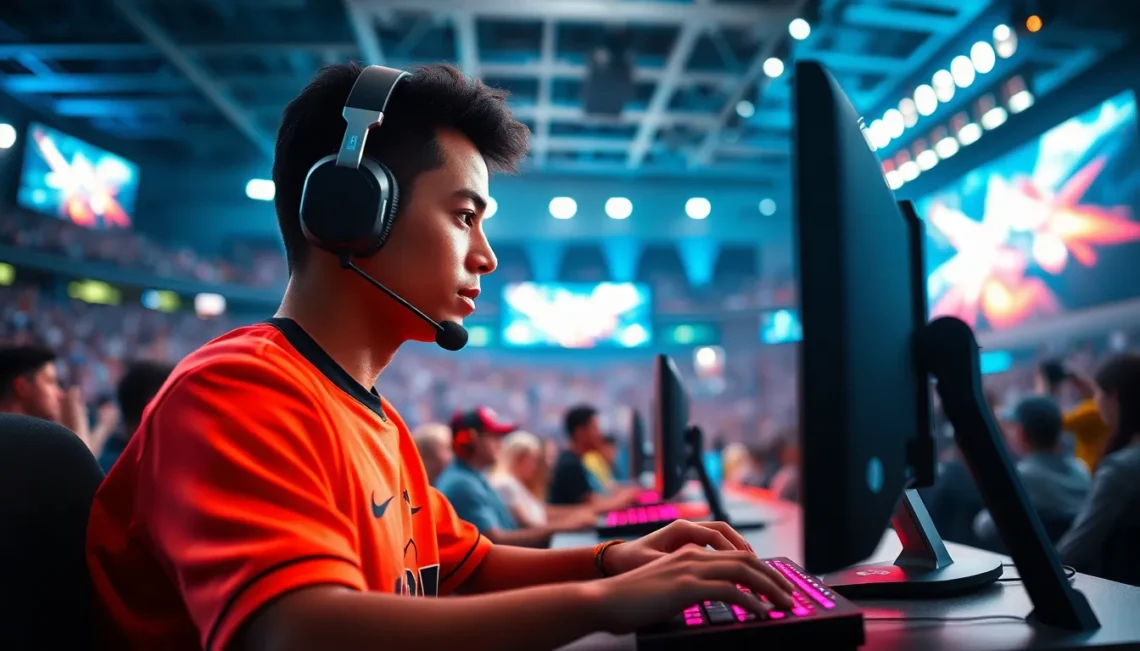
The roar of a packed stadium. Flashing lights illuminating thousands of faces. Players hunched over their equipment, fingers flying across keyboards and controllers while millions more watch from home. This isn't a traditional sports arena - it's the world of competitive gaming, and it's reshaping entertainment as we know it. E-sports has exploded from basement hobby to billion-dollar industry in just two decades. What started as small LAN parties and arcade tournaments now fills massive venues, attracts mainstream sponsors, and creates careers for players, coaches, analysts, and content creators worldwide. Whether you're a gamer or not, the e-sports phenomenon affects how we think about competition, entertainment, and digital culture.
From Niche Hobby to Mainstream Phenomenon
Remember when video games were just something kids did in their spare time? Those days are long gone. E-sports viewership has skyrocketed past many traditional sports, with major tournaments regularly drawing over 100 million viewers. The 2021 League of Legends World Championship peaked at 73.8 million concurrent viewers - that's more than the NBA Finals.
This growth didn't happen overnight. The foundation was laid in the late 1990s and early 2000s with games like StarCraft in South Korea, where professional gaming found its first real foothold. Internet cafes became training grounds. Television networks started broadcasting matches. Players became celebrities. Fast forward to today, and we've got purpose-built e-sports arenas, college scholarship programs, and professional teams backed by traditional sports franchises.
The legitimacy question has been answered. Universities now offer e-sports programs with full scholarships. High schools are forming competitive gaming teams alongside football and basketball. The pandemic accelerated this acceptance - when traditional sports shut down, millions turned to e-sports for their competitive entertainment fix. Many never looked back.
The Economics Behind the Controllers
Let's talk money, because the numbers are staggering. The global e-sports market is projected to exceed $1.8 billion in revenue this year. Prize pools for major tournaments regularly hit eight figures. The International, Dota 2's premier tournament, has awarded over $40 million in a single year. Top players earn millions annually through tournament winnings, team salaries, streaming revenue, and sponsorship deals.
But it's not just about the players. An entire ecosystem has developed around competitive gaming. Coaches analyze gameplay and develop strategies. Analysts break down matches for viewers. Shoutcasters (the e-sports equivalent of sportscasters) provide commentary that can make or break a viewer's experience. Behind the scenes, you'll find nutritionists, sports psychologists, team managers, and content creators all making a living from the industry.
Brands have taken notice too. Companies that never touched gaming are now major sponsors. Mercedes-Benz partners with League of Legends. Mastercard sponsors League of Legends' championship series. Even the military has gotten involved, using e-sports as a recruitment tool. The audience is young, engaged, and increasingly difficult to reach through traditional advertising - exactly what marketers crave.
Fun Facts & Trivia
- The first known video game tournament took place at Stanford University in 1972, with Spacewar as the game and a year's subscription to Rolling Stone magazine as the prize.
- South Korea recognizes professional gaming as a legitimate career and issues athlete visas specifically for e-sports players traveling for tournaments.
- The average age of professional e-sports players is just 21-25 years old, with many retiring from competitive play before 30 due to declining reaction times.
- E-sports athletes can make up to 500 actions per minute during intense gameplay - that's more than 8 decisions every single second.
- By 2023, more than 532 million people worldwide watched e-sports content, with China representing nearly a third of that audience.
Skills That Transfer Beyond Gaming
Think competitive gaming is just about quick reflexes and button mashing? Think again. Professional e-sports demands skills that translate directly to other career paths. Strategic thinking, split-second decision making under pressure, teamwork, communication - these aren't just gaming skills, they're life skills.
Top teams practice 8-12 hours daily, reviewing footage, analyzing opponent strategies, and refining team coordination. The discipline required matches any traditional sport. Players must maintain physical health too - reaction time, focus, and endurance all depend on proper nutrition, exercise, and sleep. Many professional teams now employ fitness trainers and require regular workouts.
The mental game is just as demanding. Players face intense pressure performing in front of millions. They must adapt strategies on the fly as situations change. Communication becomes critical when coordinating with teammates in real-time. These experiences build resilience, problem-solving abilities, and leadership skills that serve players well after their gaming careers end.
Educational institutions are recognizing these benefits. College e-sports programs teach project management, event production, marketing, and broadcasting alongside competitive play. Students learn video editing, social media management, and business development. The industry creates pathways into technology, entertainment, and business careers that didn't exist a generation ago.
Challenges and Growing Pains
Not everything in e-sports is perfect. The industry faces real challenges that need addressing. Player burnout is rampant - the pressure to perform, constant practice schedules, and short career spans take their toll. Mental health issues are common but often stigmatized. Some players develop repetitive strain injuries from thousands of hours at keyboards and controllers.
The industry also struggles with inclusivity. Women make up a small percentage of professional players and often face harassment in competitive spaces. Efforts to create more welcoming environments are ongoing but progress has been slow. Racial diversity is improving but still lags behind the general gaming population.
Regulation remains inconsistent. Unlike traditional sports with established governing bodies, e-sports operates across multiple games, each with different publishers, rules, and tournament structures. Match-fixing scandals have occurred. Doping - yes, performance-enhancing drugs in gaming - has raised questions about testing and enforcement. The industry is working toward standardization, but we're not there yet.
There's also the question of longevity. Games rise and fall in popularity. Will today's major titles still draw audiences in ten years? How do players plan for retirement when careers typically end before 30? These are questions the industry continues grappling with as it matures.
Conclusion
E-sports has moved beyond proving itself as legitimate entertainment. It's reshaping how we think about competition, community, and career paths in the digital age. The kid playing video games in their bedroom might be developing skills for a lucrative career. The stadium filled with screaming fans isn't watching a traditional ball game - and that's perfectly fine.
The industry still has growing pains to work through. Better support systems for players, more inclusive environments, and sustainable career structures all need development. But the foundation is solid. E-sports connects people across borders, creates economic opportunities, and provides entertainment that resonates with hundreds of millions globally.
Whether you're a hardcore gamer, casual observer, or someone who's never touched a controller, e-sports deserves attention. It represents a fundamental shift in how younger generations consume entertainment and build community. The question isn't whether competitive gaming belongs in mainstream culture anymore - it's already there. The question is where it goes next.
FAQs
How much do professional e-sports players actually make?
Professional player salaries vary dramatically based on game, team, and skill level. Top-tier players in major games like League of Legends, Dota 2, or Counter-Strike can earn $1-5 million annually through team salaries, tournament winnings, streaming revenue, and sponsorships. Mid-tier professionals typically make $50,000-150,000 per year. However, lower-tier or aspiring pros might earn minimum wage or less, especially when starting out. Most professionals supplement tournament earnings with streaming, content creation, and personal sponsorships to build sustainable income.
Can you really get a college scholarship for playing video games?
Absolutely. Over 175 colleges and universities in North America now offer e-sports scholarships, with some providing full-ride packages covering tuition, room, and board. Schools have built dedicated e-sports facilities and hired professional coaches. The National Association of Collegiate Esports governs college competition with more than 5,000 student-athletes participating. Scholarships typically range from $1,000 to full tuition depending on the school and player skill level. Students compete in games like League of Legends, Overwatch, and Rocket League while earning traditional degrees.
Is e-sports recognized as a real sport by official organizations?
Recognition varies by country and organization. The Olympic Council of Asia included e-sports as a medal event in the 2022 Asian Games. Several countries, including South Korea, China, and the United States, issue athlete visas for professional gamers. However, the International Olympic Committee remains cautious, citing concerns about violent content in some games. Many traditional sports organizations now own or invest in e-sports teams. While debate continues about the "sport" classification, the professional infrastructure - teams, leagues, governing bodies, and athlete support systems - mirrors traditional sports in most meaningful ways.