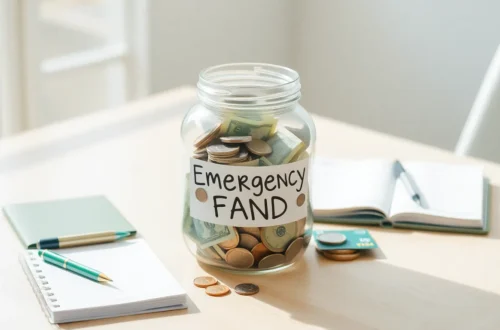
The Power of Micro-Habits: Small Changes, Big Financial Gains
I’ve always been fascinated by how tiny, almost invisible changes can completely transform our financial lives. Not because they work instantly – they don’t – but because they stack up in ways we rarely see coming. Micro-habits aren’t about dramatic financial makeovers or complicated budgeting systems that nobody sticks with anyway. They’re the financial equivalent of choosing to take the stairs instead of the elevator every day.
When I first tried implementing micro-habits in my own finances, I honestly didn’t expect much. I started by just rounding up my daily coffee purchase to the nearest dollar and putting the change in a separate account. Six months later, I was shocked to find nearly $300 sitting there. It wasn’t life-changing money, but it was definitely a wake-up call about the cumulative power of tiny actions.
The thing about financial micro-habits is that they bypass our brain’s resistance to big changes. They don’t trigger the same fear or avoidance that a major financial overhaul might. They just slip right under the radar of our excuses and procrastination, quietly building momentum while we’re barely paying attention.
Understanding the Science Behind Micro-Habits
Micro-habits work because they align perfectly with how our brains are wired. When we try to make massive changes all at once, our brain’s threat response kicks in, making us feel overwhelmed and more likely to quit. But tiny habits? They’re so small they don’t trigger resistance.
The neuroscience here is pretty straightforward – our brains form neural pathways through repetition. Each time we perform an action, the pathway gets stronger. Financial micro-habits take advantage of this by creating small, repeatable actions that gradually become automatic.
Think about it like this: if you decide to save $500 per month starting tomorrow, your brain might panic. But deciding to automatically transfer $5 daily feels manageable – even though it adds up to $150 monthly. The psychological barrier is completely different.
There’s also the concept of identity-based habits. When you consistently practice a micro-habit like checking your bank account daily or waiting 24 hours before any non-essential purchase, you start to see yourself differently. You become “someone who’s good with money” rather than “someone trying to get better with money.” That subtle shift in self-perception is surprisingly powerful.
The compounding effect of micro-habits is where the real magic happens. A 1% improvement daily compounds to nearly 38 times better over a year. In financial terms, this might mean checking your subscriptions once monthly saves $15, which doesn’t sound impressive until you realize that’s $180 yearly that continues saving automatically.
Financial Micro-Habits That Deliver Surprising Results
Let me share some of the most effective financial micro-habits I’ve seen work for both myself and others. These aren’t revolutionary, and that’s kind of the point – they’re small enough that you can start doing them today without feeling any real pain.
The “pause button” habit is one of my favorites. Simply wait 24 hours before making any non-essential purchase over $50. This tiny circuit breaker creates space between impulse and action. I started doing this and found that about 70% of the time, I completely forgot about the item I “needed” just a day earlier. Over a year, this saved me roughly $2,200 on stuff that clearly wasn’t important enough to remember.
Another powerful micro-habit is the “five-minute financial check-in.” Once a day, preferably at the same time, take five minutes to check your bank accounts and recent transactions. This isn’t about budgeting – it’s about awareness. Users of this method typically report finding billing errors, forgotten subscriptions, or spending patterns they never noticed before. One person I know discovered they were still paying for a gym membership from three moves ago!
The “round-up” approach is also surprisingly effective. Either use an app that rounds up purchases to the nearest dollar and saves the difference, or just mentally round up when calculating expenses. If lunch costs $8.50, tell yourself it was $10 and set aside the difference. This micro-habit builds a psychological buffer into your spending while creating a small but growing savings pool.
What about the “one less” habit? Each week, find one category where you can buy one less thing than usual. One less drink at happy hour, one less delivery meal, one less impulse purchase. The beauty is in its flexibility – you’re not depriving yourself completely, just exercising the “financial restraint” muscle with minimal effort.
Building a System of Financial Micro-Habits
Individual micro-habits are great, but when you connect several into a system, that’s when the real transformation happens. The key is starting small and adding gradually – trying to implement ten new habits at once defeats the whole purpose.
I like to think of financial micro-habits as falling into four main categories: earning habits, saving habits, spending habits, and awareness habits. A balanced system includes at least one from each category.
For earning, consider the “skill-building” micro-habit: spend just 10 minutes daily learning something that could increase your income. Maybe it’s a language, a technical skill, or learning about investing. The ROI on this habit can be enormous over time.
For saving, automated micro-transfers work wonders. Set up an automatic daily transfer of an amount so small you won’t notice it – even $2 or $3. After the first week, you’ll forget it’s happening, but it adds up to $60-90 monthly without any additional decisions or willpower required.
For spending, try the “substitution” habit. Each time you’re about to spend on something, ask if there’s a less expensive option that would bring you equal satisfaction. Not eliminating, just substituting. Coffee at home some days instead of every day at the café, or the generic version of a product instead of the name brand.
For awareness, a weekly “money minute” to review your progress can tie everything together. This quick check-in helps reinforce your other habits and gives you a moment to appreciate the progress you’re making, which builds momentum.
What makes these systems stick is connecting them to existing habits through a process called “habit stacking.” For example: “After I brush my teeth in the morning (existing habit), I’ll check my bank account (new micro-habit).”
Overcoming Obstacles to Financial Micro-Habits
Let’s be real – even small habits face resistance sometimes. The biggest obstacle I’ve seen is simply forgetting. We start with good intentions but then life happens, and our new micro-habits fall by the wayside.
The solution isn’t more willpower – it’s better environmental design. Want to remember to review your spending daily? Put a sticky note on your bathroom mirror or set a recurring phone reminder. The environment matters more than motivation.
Another common stumbling block is not seeing immediate results. Financial micro-habits are powerful because they compound, but that same quality means the early results are nearly invisible. This is where tracking comes in – not elaborate spreadsheets, but simple visual cues that show your consistency, not just your outcomes.
For example, a simple calendar where you mark each day you practiced your micro-habit can be motivating. The chain of marks becomes satisfying in itself, even before the financial results are evident.
Social pressure can derail micro-habits too. When friends are ordering another round or colleagues are showing off new purchases, your “wait 24 hours” habit gets tested. Having a ready phrase like “I’m going to think about it and might come back tomorrow” can help navigate those situations.
And what about when you mess up? Because you will – everyone does. The key difference between people who succeed with micro-habits and those who don’t isn’t perfection – it’s how they handle imperfection. The “never miss twice” rule is gold: if you miss a day, that’s fine, but don’t miss two in a row. This prevents a single slip from becoming a complete abandonment.
Fun Facts & Trivia
- A surprising fact is that people who practice financial micro-habits typically save 2-3 times more than those who only focus on major financial decisions, according to behavioral economics research.
- You might be surprised to learn that the average American spends roughly $1,500 annually on impulse purchases that could be eliminated with the simple “24-hour rule” micro-habit.
- It’s interesting to note that according to neurological research, it takes approximately 66 days (not the commonly cited 21 days) for a new financial habit to become automatic.
- Consider this: automatic round-up savings apps have collectively helped users save over $10 billion in spare change that would otherwise likely have been spent thoughtlessly.
- Get this: studies show that people who check their bank accounts daily are 60% less likely to overdraft and typically spend 10-15% less overall due to increased awareness.
Conclusion
When I look back at my own financial journey, it wasn’t the big decisions that made the most difference – it was the small, consistent actions that I barely noticed at the time. That’s the true power of micro-habits: they don’t require heroic effort or dramatic lifestyle changes, but they silently reshape your financial reality day by day.
I remember trying to overhaul my entire financial life at once years ago. I created elaborate spreadsheets, cut up credit cards, and swore off all unnecessary spending. It lasted about two weeks before I crashed and burned. I learned the hard way that sustainability matters more than intensity.
The beauty of micro-habits is that they work with your psychology, not against it. They slip past your brain’s resistance to change and establish new patterns almost without you noticing. And once those patterns are established, they continue delivering benefits with minimal ongoing effort.
If you’re feeling overwhelmed by your financial situation, try scaling back your ambitions. Pick just one micro-habit from this article – the smallest, easiest one – and focus on that for two weeks before adding another. The goal isn’t to transform overnight but to be slightly better positioned financially tomorrow than you are today.
Remember that consistency trumps intensity every time when it comes to financial improvement. The person who saves $5 daily without fail will always outperform the person who occasionally saves $100 but can’t maintain the habit. Pairing your financial habits with focused work sessions can reinforce both habits at once. Small, consistent actions – that’s where real financial transformation begins.
FAQs
How long does it take for financial micro-habits to show significant results?
Most people start seeing noticeable results from financial micro-habits within 60-90 days. However, the compounding effect means that the longer you practice them, the more dramatic the results become. After a full year, the same small habits might generate 5-10 times the impact they did in the first three months.
Can financial micro-habits really make a difference if I have a lot of debt?
Absolutely. In fact, micro-habits can be particularly effective for tackling debt because they help address the behavioral patterns that led to debt in the first place. Start with awareness micro-habits like daily account checking and the 24-hour purchase rule, then add small debt-reduction habits like rounding up payments or adding $5 to each minimum payment.
What’s the best financial micro-habit for someone just starting to get their finances in order?
The daily five-minute financial check-in is probably the most impactful starting point. Simply looking at your accounts and recent transactions for five minutes each day builds awareness that naturally leads to better decisions. Many people find that just knowing they’ll be reviewing their spending later makes them think twice before making impulse purchases.