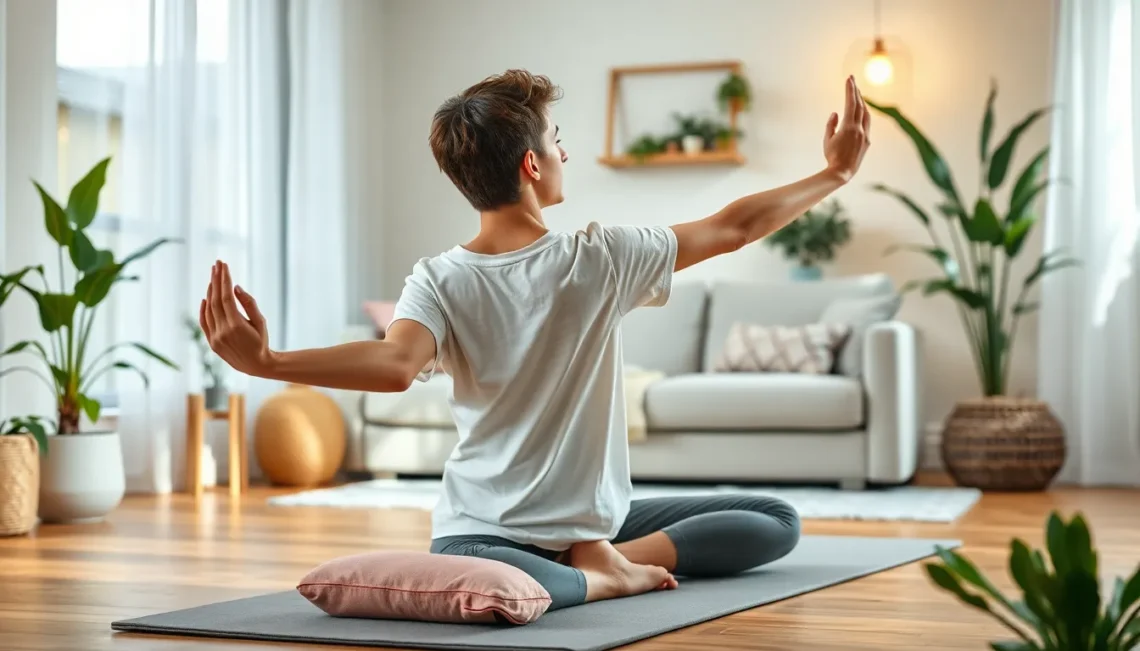
Yoga for Stress Relief: Poses and Routines You Can Do at Home
Living with stress has become so normal that many of us don’t even notice its effects anymore. Our shoulders creep up toward our ears, our breathing gets shallow, and we carry tension in our bodies like it’s a part of us. But it doesn’t have to be this way. Yoga offers a practical, accessible way to manage stress that doesn’t require fancy equipment or a gym membership.
When life gets overwhelming, having a few simple yoga poses in your back pocket can make a real difference. The beauty of yoga for stress relief is that you can practice it anywhere – in your living room, bedroom, or even a quiet corner of your office. Just a few minutes on your mat can help shift your nervous system from fight-or-flight to rest-and-digest mode.
Let’s explore some effective yoga practices that can help you find calm amid chaos, without needing to become a yoga expert or twist yourself into complicated poses.
Understanding How Yoga Reduces Stress
Yoga works on stress in multiple ways that go beyond just physical exercise. When we’re stressed, our bodies release cortisol and adrenaline, preparing us to fight or flee from perceived danger. The problem is, most modern stressors don’t require either response – yet our bodies react as if they do.
The mindful breathing practiced in yoga directly counters this stress response. When you breathe deeply and slowly, you’re basically telling your nervous system, “Hey, everything’s actually okay.” This activates your parasympathetic nervous system – the part responsible for calming you down after stress.
The physical postures (asanas) in yoga help release tension we hold in our bodies. Think about it – when you’re stressed, where do you feel it? Maybe your neck tightens, your shoulders bunch up, or your lower back aches. Specific yoga poses target these common tension spots.
There’s also the mindfulness aspect. Yoga encourages present-moment awareness, which pulls your attention away from stress-inducing thoughts about the past or future. When you’re focusing on holding a pose or following your breath, it’s hard to simultaneously worry about your to-do list or replay that awkward conversation from yesterday.
Research backs this up too. Studies have found that regular yoga practice can lower blood pressure, reduce heart rate, and decrease levels of stress hormones in the body. One study found that just 10 weeks of yoga helped reduce stress and anxiety better than simple relaxation techniques.
You don’t need to understand all the science to benefit from yoga, though. The simple act of taking time for yourself and moving mindfully can create significant shifts in how you experience stress.
Effective Stress-Relieving Yoga Poses
Some yoga poses are particularly good at releasing tension and triggering relaxation. The great thing is that many of these don’t require advanced flexibility or strength. Here are some poses that work well for stress relief:
Child’s Pose (Balasana)
This restful pose is like giving yourself a time-out from life. Kneel on your mat, bring your big toes together, and sit back on your heels. Then fold forward, extending your arms in front of you or alongside your body. This gentle stretch releases tension in your back, shoulders, and neck while promoting deeper breathing.
Child’s pose activates the parasympathetic nervous system, which helps counteract the stress response. It’s also a pose you can stay in for several minutes, making it perfect for when you need a longer reset.
Forward Fold (Uttanasana)
Stand with feet hip-width apart, then hinge at your hips to fold forward. Let your head hang heavy and your arms dangle – no need to touch the floor. This pose is especially helpful for headaches and neck tension caused by stress.
The mild inversion of forward fold increases blood flow to your brain while calming your nervous system. It’s also accessible – you can bend your knees as much as needed to make it comfortable.
Legs Up the Wall (Viparita Karani)
Simply lie on your back and extend your legs up a wall, with your sitting bones as close to the wall as comfortable. This gentle inversion helps reduce swelling in legs and feet while triggering a relaxation response.
This pose is often called the “anxiety cure” by yoga teachers because of how effectively it soothes an overactive nervous system. Try staying here for 5-10 minutes with eyes closed for maximum benefit.
Corpse Pose (Savasana)
Lie on your back with arms and legs extended, palms facing up. While it looks simple, this is actually considered one of the most challenging poses because it asks you to be completely still and present.
Savasana allows your body to integrate the benefits of your practice while promoting deep relaxation. Even 5 minutes in this pose can significantly lower stress levels and improve your mood.
Creating a Simple Home Stress-Relief Routine
Having a structured sequence makes it easier to practice regularly. Here’s a simple 15-minute routine you can do almost anywhere:
Start seated comfortably with eyes closed. Take 10 deep breaths, focusing on making your exhales longer than your inhales – this signals to your nervous system that it’s safe to relax. Then move through these poses, holding each for 5-10 breaths:
- Gentle seated twists to release back tension
- Cat-cow poses to warm up your spine
- Downward-facing dog to stretch your whole body
- Low lunge on each side to release hip tension (which often stores stress)
- Child’s pose to rest
- Legs up the wall or lying down with knees hugged to chest
- End with 3-5 minutes in corpse pose
The key is consistency rather than intensity. A gentle practice done regularly will have more impact on your stress levels than an occasional intense session. Try to practice at the same time each day – maybe first thing in the morning or right after work – to help build the habit.
If 15 minutes feels overwhelming, start with just 5 minutes of breathing and one or two poses. You can gradually extend your practice as it becomes part of your routine.
Remember that yoga doesn’t have to look perfect. Your body might be tight, you might wobble in poses, and your mind will certainly wander – that’s all completely normal. The benefit comes from showing up and being present with whatever arises, not from performing the “perfect” pose.
Fun Facts & Trivia
- A surprising fact is that the word “yoga” comes from the Sanskrit root “yuj,” meaning to yoke or unite – reflecting how the practice connects body and mind to reduce stress.
- It’s interesting to note that research shows just 20 minutes of yoga can improve brain function and energy levels more effectively than walking for the same amount of time.
- Get this: breathing exercises used in yoga can actually change your heart rate variability, a key indicator of how well your body handles stress.
- You might be surprised to learn that yoga has been practiced for over 5,000 years, though the stress-relieving aspects have become more emphasized in modern practice.
- Consider this: while many think of yoga as just physical postures, traditional yoga consists of eight limbs, with physical poses being just one aspect of the complete system.
Making Yoga Work for Your Real Life
The biggest obstacle to yoga isn’t flexibility or strength – it’s making it fit into your actual life. Here are some practical ways to make yoga for stress relief more accessible:
Ditch perfectionism. Your yoga practice doesn’t need to look Instagram-worthy. If you can only do five minutes while your kids play nearby, or if your dog keeps trying to join you on the mat – that still counts.
Use props from around your house. No yoga blocks? Use a stack of books. No bolster? Try a couch cushion or folded blanket. No strap? A belt or tie works fine.
Remember that stress relief can come from brief moments of practice. If you notice your shoulders creeping up toward your ears during a stressful workday, take a one-minute break to do some shoulder rolls and deep breathing.
Link yoga to existing habits to help it stick. Maybe you do a few minutes of gentle stretching while your coffee brews in the morning, or practice legs-up-the-wall while watching TV in the evening.
Consider technology a helper, not a hindrance. There are countless free yoga videos online specifically for stress relief. Find a few teachers whose approach resonates with you and bookmark their shorter videos for when you need them.
Adapt poses to fit your body and needs. Feel uncomfortable in certain positions? Modify them. Yoga is about finding what works for your unique body, not forcing yourself into a predetermined shape.
Remember that consistency trumps duration. Three 10-minute sessions spread throughout your week will likely help more with stress than one hour-long class when you’re already overwhelmed.
Conclusion
Yoga for stress relief isn’t about achieving perfect poses or transforming into a different person. It’s about creating small pockets of calm in your day and gradually building resilience to life’s inevitable stressors.
The beauty of this approach is that it meets you exactly where you are. Whether you’re dealing with work pressure, family responsibilities, health concerns, or just the general weight of existing in today’s world, these simple practices can help you find your center again.
I’ve learned the hard way that waiting until stress becomes overwhelming before addressing it isn’t effective. The practices that help most are the ones we turn to regularly, not just in crisis moments. Think of yoga as preventative medicine for your stress levels – something that builds your capacity to weather life’s challenges.
As you explore these practices, be patient with yourself. Some days, your body will feel open and receptive; other days, stiff and resistant. Some days, your mind will settle easily; other days, it will bounce from thought to thought like a pinball. All of this is part of the practice.
The most important thing is to start somewhere. Maybe it’s just sitting quietly and breathing for five minutes, or trying child’s pose when you feel overwhelmed. Whatever form it takes, your yoga practice is valid if it helps you feel even slightly more at ease in your body and mind.
Frequently Asked Questions
How long do I need to practice yoga to feel stress relief?
You might notice some immediate benefits after just one session, especially in terms of feeling calmer and more centered. Even 5-10 minutes of mindful breathing and gentle movement can trigger your relaxation response. For lasting changes in how your body and mind respond to stress, aim for regular practice – even short sessions a few times per week can make a significant difference over time.
Can I practice yoga for stress relief if I’m not flexible?
Absolutely! The idea that you need to be flexible to do yoga is a common misconception. Yoga actually helps develop flexibility over time, but you don’t need it to start. For stress relief especially, the benefits come more from the breathing and mindfulness aspects than from how deeply you can move into poses. Use props, modify poses, and remember that yoga is about working with your body as it is today, not forcing it into positions it’s not ready for.
Is it normal to feel emotional during yoga practice?
Yes, this is very common. We often store stress and emotions in our bodies, particularly in areas like the hips, shoulders, and jaw. When you release physical tension through yoga, emotional tension might surface too. Some people find themselves unexpectedly tearful during hip openers or deep breathing. This is a natural part of the stress release process and actually indicates that the practice is working on a deeper level.