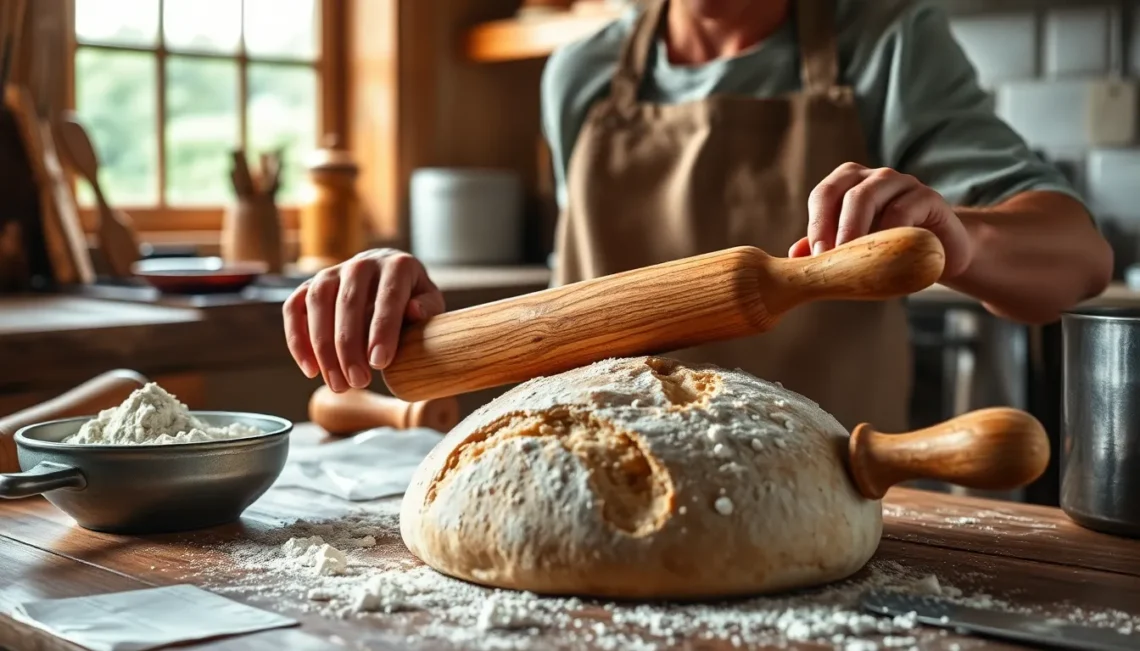
There’s something uniquely satisfying about sourdough bread, isn’t there? It’s more than just flour and water; it’s a living thing, a small act of culinary alchemy happening right in your kitchen. For so many home bakers, the journey into sourdough baking becomes a quiet obsession, a way to connect with age-old traditions and create something truly wholesome. It’s about patience, observation, and the surprising joy of coaxing a simple starter into a beautiful, crusty loaf. This isn’t just about following a recipe; it’s about understanding a process, an interaction with natural yeasts and bacteria that have been making bread delicious for centuries. It’s a skill that asks for a bit of you, and in return, gives back so much more than just a tasty meal.
Understanding Your Sourdough Starter’s Moods
Think of your sourdough starter as a pet. Seriously, it has good days and bad days, and it definitely lets you know when it’s hungry or happy. A healthy, active sourdough starter is the absolute heart of good sourdough bread. It’s what gives your bread that wonderful rise, the distinctive tang, and those beautiful holes in the crumb. If your starter isn’t doing its job, well, your loaf probably won’t either. It’s a foundational piece, honestly.
When your starter is thriving, it will look bubbly and alive, perhaps even doubling in size a few hours after feeding. You might see tiny rivers of activity inside the jar, and it’ll smell pleasantly sour, maybe a bit like yogurt or even fruit. That’s a happy starter, ready to go to work for you. On the flip side, a sluggish starter might just sit there, looking flat and perhaps smelling a bit like nail polish remover or something less pleasant. That’s its way of telling you, “Hey, I need some attention.”
Why does this matter so much? Because the strength of your starter directly affects the strength of your dough. A weak starter can lead to dense, flat loaves that don’t rise properly. A robust one provides the lift and fermentation needed for that airy, open texture we all crave. Learning to read your starter-whether it’s peaking or needs another feed-is perhaps the most important skill you can pick up in sourdough baking. It sets the stage for everything else, making sure your effort isn’t wasted on a sleepy culture. Pay attention to it, feed it consistently, and watch it respond. It’s truly a conversation.
The Dance of Dough Hydration
Once you’ve got a happy starter, the next big thing to wrap your head around is dough hydration. This refers to the ratio of water to flour in your dough, and it has a massive impact on the final result. More water generally means a more open, airy crumb, but it also means a stickier, harder-to-handle dough. Less water, and your dough becomes much more manageable, but you might end up with a denser loaf. It’s a balance, a kind of delicate dance you learn to lead.
Think about it: a very high hydration dough, say 80% or more, will feel very wet and loose, almost like a thick batter at first. It will spread easily and require gentle handling. Beginners sometimes find this frustratingly sticky, but with practice, you learn to appreciate how it contributes to a really open, almost custardy interior. A lower hydration dough, maybe 65-70%, will feel much stiffer and easier to knead or fold. It keeps its shape better, which can be great for beginners. Neither is right or wrong, but they each lead to different types of bread and require different handling techniques.
Understanding hydration isn’t just about following a number in a recipe; it’s about feeling the dough. The flour you use, the humidity in your kitchen, and even how accurately you measure can all affect how much water your dough “needs” on any given day. You might start with a recipe’s recommendation, but then learn to adjust slightly based on how the dough feels in your hands. Is it too stiff and resisting your folds? Maybe a tiny bit more water next time. Is it a sloppy mess? Perhaps less. Getting a feel for hydration transforms your baking from rigid rule-following to intuitive artistry, giving you more control over the texture and structure of your finished loaf.
Reading Your Dough – The Fermentation Clues
So, you’ve got a lively starter and a well-hydrated dough. What comes next is fermentation, specifically bulk fermentation and then proofing. This is where the magic really happens, where the wild yeasts and bacteria go to work, creating gas and developing all those complex sourdough flavors. But how do you know when it’s “done”? This is honestly one of the trickiest parts for new bakers, because there isn’t a single clock time that works every time. It depends on your kitchen temperature, your starter’s strength, and even the type of flour.
During bulk fermentation, your dough should grow significantly-perhaps 30% to 50% in volume. It will feel airier, maybe even jiggly like a big, soft marshmallow. You might see small bubbles forming on the surface. The dough will feel strong and elastic, not tearing easily. This stage is crucial because it builds the internal structure and flavor. If you stop too soon, your bread will be dense and lack flavor. Go too long, and it might collapse in the oven, tasting overly sour.
Then comes proofing, often done in a cold fridge overnight. This slows down the fermentation but continues to develop flavor. For proofing, a common test is the “poke test”: gently press your floured finger into the dough. If it springs back slowly, leaving a slight indentation, it’s probably ready. If it springs back immediately, it needs more time. If the indentation stays completely, it might be overproofed. Learning to interpret these subtle cues is a skill built on observation and a bit of trial and error. It frees you from strict timings and lets you respond to what your dough is actually telling you, which is pretty cool, if you ask me.
Tackling Common Sourdough Stumbles
Let’s be real, sourdough baking can sometimes feel like a puzzle. You put in the work, follow the steps, and then… a flat loaf, or maybe a gummy crumb. It happens to everyone, honestly. But understanding why these things occur is half the battle, and a big part of sourdough troubleshooting. It’s not about perfection every time, but about learning from the little hiccups along the way.
One common issue is a flat loaf. Often, this points back to a few things: perhaps your starter wasn’t active enough, or your dough was under-proofed. If it didn’t develop enough strength during bulk fermentation-meaning not enough folds or too little time-it won’t hold its shape. Another culprit can be over-proofing; the dough rises beautifully in the bowl, then collapses in the oven because all the structure has given out. It’s a delicate balance. The gummy crumb? That’s usually a sign of underbaking, or maybe cutting into the bread too soon after it comes out of the oven. All those starches need time to set, you know?
The key here isn’t to get discouraged, but to become a detective. Did your starter smell off? Was your kitchen particularly cold or hot? Did the dough feel too sticky, or too stiff? Every bake, whether it’s a triumph or a learning experience, gives you clues. Keep a little journal, maybe, noting temperatures and timings. Over time, you’ll start to recognize patterns and make small adjustments that lead to big improvements. It’s a process of refinement, building confidence with each loaf you pull from the oven, whether it’s perfect or just perfectly imperfect.
Fun Facts & Trivia
- It’s interesting to note that sourdough starters can live for hundreds of years. There are starters reportedly passed down through generations, some tracing back to the California Gold Rush!
- A surprising fact is that sourdough bread is often easier to digest for some people compared to commercially yeasted breads. This is because the long fermentation process breaks down complex carbohydrates and gluten proteins.
- Here’s a fun piece of trivia: the characteristic sour flavor of sourdough comes not just from yeast, but primarily from lactic acid bacteria (LAB) within the starter, which produce various acids during fermentation.
- You might be surprised to learn that sourdough starter can be stored in the fridge for weeks, even months, without feeding. It just needs a few revitalizing feeds at room temperature before it’s strong enough to bake with again.
So, we’ve talked about the life of your starter, the wetness of your dough, what to look for during fermentation, and how to figure out what went wrong when things don’t quite go to plan. What’s worth remembering here, I think, is that sourdough baking is less about rigid rules and more about observation and adapting. It’s a living craft, not a factory process. Every batch of flour is a little different, your kitchen temperature fluctuates, and your starter has its own personality. You’re learning to work with these variables, not against them.
Honestly, I learned the hard way that impatience is the biggest enemy of a good loaf. Rushing fermentation, cutting into warm bread, or giving up after a few flat attempts-those were my early mistakes. Patience, I tell you, is probably the most valuable ingredient in sourdough. It teaches you to slow down, to pay attention, to trust the process even when you can’t quite see the immediate outcome.
The art of sourdough is truly a rewarding one. It’s a journey of continuous learning, of subtle adjustments, and of finding immense satisfaction in creating something so nourishing and delicious from scratch. It connects you to a deeper rhythm, a sense of making and providing that feels really good. So, yeah-keep going, keep experimenting, and enjoy every single loaf, perfect or otherwise. It’s all part of the process.
Can I really keep a sourdough starter alive indefinitely?
Yes, absolutely! With consistent feeding and proper care, a sourdough starter can live for many years, even generations. Some bakers have starters that are over a century old, sustained by regular feeding with fresh flour and water. It’s a living culture that just keeps going.
What if my sourdough bread is too sour?
If your sourdough bread tastes excessively sour, it often means your starter or dough fermented for too long, allowing acetic acid (which contributes a sharper sourness) to dominate. Try reducing the fermentation time, especially the bulk fermentation, or use your starter at its peak activity after a fresh feeding.
How do I make my sourdough bread have bigger holes (open crumb)?
Achieving an open crumb usually comes down to a few factors: using a very active starter, proper dough hydration (often higher hydration helps), gentle handling to preserve gas bubbles during shaping, and sufficient but not excessive bulk fermentation.
Why does my sourdough loaf come out flat?
A flat sourdough loaf is a common problem. It could be due to an inactive starter, under-proofed dough (not enough fermentation to build structure), over-proofed dough (the structure developed, then collapsed), or insufficient dough strength from not enough folds or shaping.
Is sourdough bread truly healthier than regular bread?
Many believe sourdough bread offers health benefits. The longer fermentation process can break down some gluten, making it potentially easier to digest for some individuals. It also can lower the glycemic index and increase the bioavailability of certain nutrients compared to bread made with commercial yeast.