We're living through one of the most fascinating competitions in history - and it's not between countries or companies. It's between AI and human intelligence. Every day, new headlines announce AI breaking records in one domain while humans prove irreplaceable in another. Understanding where each truly excels isn't just academic curiosity. It shapes how we work, what skills matter, and which tasks we should confidently hand off versus jealously guard. The answer isn't simple, and that's exactly what makes it worth exploring.
Pattern Recognition: AI's Undisputed Territory
When it comes to spotting patterns in massive datasets, AI doesn't just win - it dominates. Machine learning systems can analyze millions of medical images, financial transactions, or customer behaviors in the time it takes you to finish your morning coffee. They don't get tired, distracted, or biased by the last three cases they reviewed.
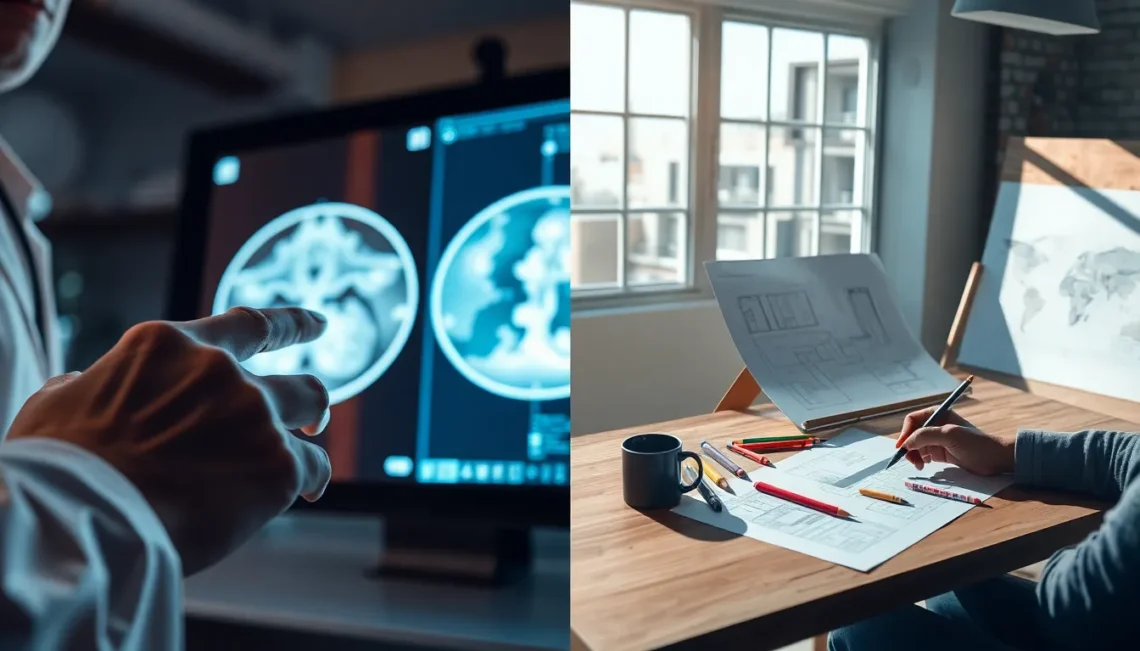
Take medical diagnostics. AI systems trained on vast image libraries can detect early-stage cancers, retinal diseases, and bone fractures with accuracy that matches or exceeds experienced radiologists. The key advantage isn't that AI is smarter - it's that it has seen exponentially more examples and can recall every single one perfectly. A human radiologist might review thousands of scans in their career. An AI system reviews millions during training.
The same principle applies to fraud detection, quality control in manufacturing, and even predicting equipment failures. AI excels at tasks requiring speed, consistency, and pattern matching across enormous datasets. These aren't just incremental improvements - they're capabilities that fundamentally weren't possible before.
But here's the catch: AI only recognizes patterns it has been trained to see. Show it something genuinely novel, something that breaks the mold, and it stumbles. It can tell you this tumor looks like the 47,000 malignant samples in its training set. It cannot tell you this is the first case of its kind.
Creative Problem-Solving: Where Humans Still Reign
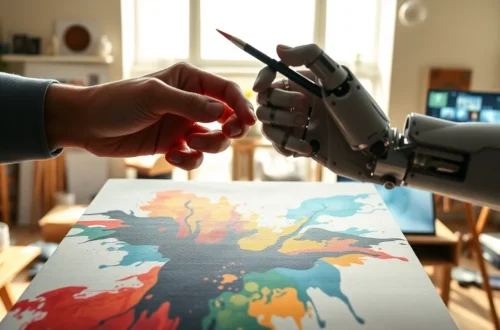
Creativity remains stubbornly human. Not the surface-level creativity of generating images or writing marketing copy - AI handles those reasonably well now. We're talking about the deep, inventive problem-solving that requires understanding context, making intuitive leaps, and combining ideas from wildly different domains.
Research has shown that when faced with novel, open-ended challenges requiring improvisation, humans consistently outperform AI systems. Studies examining creative problem-solving reveal that large language models struggle with tasks requiring genuine innovation rather than pattern recombination. Give a human a paperclip, a rubber band, and a shoelace, and they might MacGyver their way to a solution you never imagined. Give AI the same challenge, and it will suggest variations on solutions it has seen before.
This matters enormously in fields like architecture, product design, scientific research, and strategic planning. A human architect doesn't just optimize for structural integrity and cost - they imagine how a space will make people feel, how light will move through it at different times of day, how it will age and weather. They draw on memories of places they've been, emotions they've felt, cultural contexts they understand intuitively.
AI can generate thousands of floor plan variations. But it cannot tell you which one will make a family feel at home, or which design will become iconic. That requires lived experience, emotional intelligence, and the ability to synthesize meaning from the messy, unquantifiable aspects of human life.
Fun Facts & Trivia
- Chess computers achieved grandmaster-level play in the late 1990s, but AI still struggles with games requiring social deduction and bluffing, where reading human behavior matters more than calculating moves.
- The human brain operates on roughly 20 watts of power - about the same as a dim light bulb - while training large AI models can consume megawatts, equivalent to the power usage of hundreds of homes.
- Humans can learn to recognize a new object category from just a handful of examples, sometimes even one, while most AI systems need thousands or millions of labeled training samples to achieve similar recognition accuracy.
- AI translation systems handle common language pairs well but still make significant errors with idioms, cultural references, and context-dependent meanings that native speakers navigate effortlessly.
- In taste tests and sensory evaluation, human panels remain the gold standard because our perception integrates texture, aroma, temperature, and cultural associations in ways current AI cannot replicate.
Emotional Intelligence and Human Connection
If you've ever needed to deliver difficult news, negotiate a sensitive conflict, or comfort someone in crisis, you know this truth viscerally: emotional intelligence is profoundly human. AI can simulate empathy through carefully crafted responses. It can analyze sentiment in text and adjust its tone accordingly. But it doesn't actually feel anything, and that absence shows up in subtle but crucial ways.
Consider therapy and counseling. While AI can provide mental health support and resources, human therapists excel at building genuine therapeutic relationships and adapting to the nuanced emotional states that emerge in real time. A skilled therapist reads micro-expressions, notices what you don't say, picks up on the hesitation in your voice. They remember not just the facts of your previous sessions but the emotional texture of them.
The same principle extends to leadership, teaching, customer service, and any role requiring trust and human connection. People don't just want their problems solved - they want to feel heard, understood, and valued. An AI chatbot can resolve your billing issue efficiently. A human customer service representative can make you feel like the company actually cares about your frustration.
This isn't sentimentality. It's practical reality. Teams follow leaders they trust. Students learn better from teachers who understand their individual struggles. Customers stay loyal to brands that treat them like people, not ticket numbers. These dynamics require genuine emotional presence, something AI can approximate but not authentically provide.
Adaptability in Unpredictable Environments
Humans are stunningly adaptable generalists. We can switch contexts rapidly, apply knowledge from one domain to solve problems in another, and function effectively even when conditions change dramatically. AI systems, despite their impressive capabilities, remain narrow specialists that struggle when the environment shifts beyond their training parameters.
Think about a restaurant chef during a supply shortage. They can improvise substitutions, adjust recipes on the fly, and create something delicious from whatever ingredients are available. They draw on taste memory, understanding of flavor chemistry, and creative intuition. An AI recipe generator, trained on millions of recipes, would struggle to adapt meaningfully if key ingredients suddenly became unavailable.
This adaptability extends to physical tasks in unstructured environments. Humans navigate crowded sidewalks, adjust their grip when picking up objects of varying fragility, and respond to unexpected obstacles without conscious thought. We've spent millions of years evolving these capabilities. AI robotics, despite massive investment, still struggles with tasks a toddler handles easily - like walking reliably on uneven terrain or manipulating unfamiliar objects.
The gap matters most in situations requiring judgment calls with incomplete information. Emergency responders, field medics, and crisis managers constantly make decisions where the rulebook doesn't apply and the stakes are high. They synthesize partial information, trust their instincts, and adapt their approach as new information emerges. AI can support these decisions with data and analysis, but it cannot replace the human capacity to function effectively in genuine uncertainty.
Conclusion
The AI versus human question isn't really about winners and losers. It's about recognizing complementary strengths. AI excels at scale, speed, consistency, and pattern recognition across vast datasets. Humans excel at creativity, emotional intelligence, adaptability, and judgment in novel or ambiguous situations. The most effective approach isn't choosing one over the other - it's understanding which tool fits which job.
As we move forward, the valuable skills won't be the ones AI can easily replicate. They'll be the distinctly human capabilities: creative problem-solving, building genuine relationships, making ethical judgments, and adapting to situations we've never encountered before. That doesn't mean AI isn't transformative - it absolutely is. But transformation doesn't mean replacement. It means partnership, with each side contributing what it does best. The real competitive advantage, whether for individuals or organizations, lies in knowing exactly where that line falls.
FAQs
Can AI ever develop true creativity like humans?
Current AI systems generate creative outputs by recombining patterns from their training data, which can produce impressive results but isn't the same as human creativity. True creativity involves making intuitive leaps, drawing connections across disparate experiences, and creating something genuinely novel rather than remixing existing patterns. While AI continues advancing, the type of creativity that comes from lived experience, emotional depth, and genuine insight remains distinctly human. Future AI architectures might narrow this gap, but we're not there yet.
What jobs are most at risk from AI automation?
Jobs involving repetitive tasks, clear rules, and large amounts of data processing face the highest automation risk. This includes data entry, basic bookkeeping, routine customer service inquiries, and some aspects of legal document review and medical diagnostics. However, even within these fields, roles requiring judgment, client relationships, and handling exceptions remain more secure. The safest positions combine technical skills with human capabilities like creativity, emotional intelligence, complex problem-solving, and adaptability to novel situations.
How can humans stay competitive as AI capabilities grow?
Focus on developing skills that complement rather than compete with AI. This means strengthening emotional intelligence, creative problem-solving, cross-disciplinary thinking, and the ability to work effectively in ambiguous situations. Learn to use AI as a tool that amplifies your capabilities rather than viewing it as a replacement. Build expertise in areas requiring human judgment, ethical reasoning, and genuine relationship-building. The most valuable professionals will be those who can effectively collaborate with AI systems while providing the distinctly human elements that machines cannot replicate.