When an AI-generated artwork won first prize at the Colorado State Fair in 2022, the art world erupted in debate. Jason Allen's "Théâtre D'opéra Spatial" sparked fierce conversations about creativity, authorship, and what it means to be an artist in an age where machines can produce stunning visual works in seconds. This wasn't just another tech controversy - it touched something fundamental about human expression and identity. As AI tools become more sophisticated and accessible, we're facing a crucial question: will artificial intelligence collaborate with artists to push creative boundaries, or will it compete with them for recognition, income, and relevance?
The Rise of AI in Creative Spaces
AI has moved far beyond simple filters and editing tools. Today's generative AI systems can create original paintings, compose music, write poetry, and even design sculptures. These aren't random outputs - they're often visually striking, emotionally resonant works that challenge our assumptions about machine capabilities.
The art market has already taken notice. In 2018, Christie's auction house sold "Portrait of Edmond de Belamy," an AI-generated artwork by the Obvious collective, for $432,500. That sale marked a turning point, proving that collectors would pay serious money for art created with algorithmic assistance. Traditional galleries, once skeptical, now host exhibitions featuring AI-generated pieces alongside conventional works.
But this rapid adoption has created tension. Many artists feel threatened by tools that can produce finished artwork in minutes, work that might have taken them days or weeks to complete by hand. The fear isn't irrational - if a client can generate a logo or illustration using AI for free, why would they hire a human designer? This economic pressure sits at the heart of the competition narrative, where AI becomes a rival rather than a partner.
When Perception Shapes Value
Here's something revealing about how we view AI art: research has shown that people valued art identified as AI-generated 62 percent less than art identified as human-made, even when they couldn't tell the difference visually. Think about that for a moment. The artwork itself remained identical, but simply knowing a machine created it dramatically reduced its perceived worth.
This bias tells us that art isn't just about visual appeal or technical skill. We value the human story behind creation - the struggle, the intention, the lived experience that informs artistic choices. When we look at a painting, we're not just seeing colors and shapes. We're connecting with another person's perspective, their emotional journey, their unique way of seeing the world. AI, no matter how sophisticated, doesn't have experiences or emotions. It processes patterns and generates outputs based on training data.
This perception gap creates interesting dynamics in the art world. Some artists now deliberately hide their use of AI tools, fearing their work will be devalued. Others embrace transparency, arguing that the creative vision and curation still come from human minds. The controversy has grown significant enough that competitions like the Colorado State Fair now require artists to disclose if AI was used in their submissions, attempting to level the playing field and maintain clear categories.
Fun Facts & Trivia
- The Obvious collective's "Portrait of Edmond de Belamy" was created using a type of AI called a Generative Adversarial Network, where two neural networks essentially compete with each other to produce increasingly realistic outputs.
- Jason Allen spent over 80 hours refining prompts and selecting the final image for "Théâtre D'opéra Spatial," challenging the notion that AI art requires no human effort or skill.
- Some traditional art institutions have begun creating separate categories for AI-assisted works rather than banning them outright, recognizing that the technology isn't going away.
- AI art generators are trained on millions of existing artworks, raising complex copyright questions about whether the output infringes on the original artists whose work formed the training data.
The Collaboration Potential
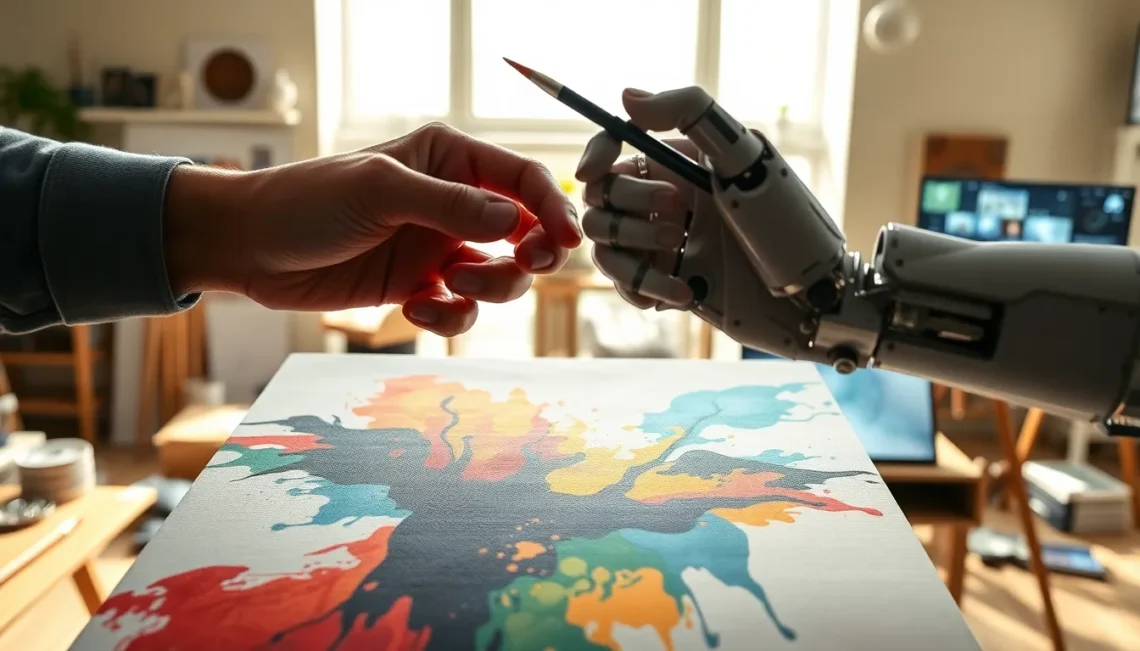
Despite the heated debates, many artists are finding genuine value in AI as a collaborative partner. The technology can assist with tasks like generating preliminary design options, exploring color palettes, or creating variations on a theme. For multimedia artists, AI opens entirely new creative possibilities - combining visual art with generative music, creating interactive installations that respond to viewer input, or producing animations that would be prohibitively time-consuming by hand.
Think of AI as a sophisticated brainstorming partner. A graphic designer might use it to quickly generate dozens of logo concepts, then refine and personalize the most promising ones. A painter could experiment with composition ideas before committing to canvas. A sculptor might use AI to visualize how a piece would look from different angles or in different materials. In these scenarios, AI doesn't replace human creativity - it amplifies it, handling repetitive tasks and expanding the range of possibilities an artist can explore.
This collaborative approach also democratizes certain aspects of art creation. Someone with a clear artistic vision but limited technical drawing skills can now bring their ideas to life with AI assistance. Musicians who can't afford expensive studio time can experiment with AI-generated backing tracks. The barrier to entry drops, potentially bringing more diverse voices into creative fields.
The key difference between collaboration and competition often comes down to control and intention. When an artist uses AI as one tool among many, maintaining creative direction and making deliberate choices about the final output, that's collaboration. When AI generates the entire work with minimal human input or curation, the line blurs considerably.
Conclusion
The relationship between AI and art won't be purely collaborative or purely competitive - it will be both, depending on how we choose to use these tools and how we structure our creative industries. Artists who embrace AI as a collaborative partner, using it to enhance rather than replace their creative process, will likely find new opportunities and capabilities. Those who view it solely as a threat may struggle as the technology becomes more prevalent.
What matters most is maintaining space for human creativity, intention, and experience in the artistic process. AI can generate images, but it can't live a life, feel genuine emotion, or develop a unique perspective shaped by years of observation and reflection. The art world needs to find ways to value and compensate human artists fairly while also acknowledging that tools evolve and creative processes change. We've seen this pattern before with photography, digital art, and other technological shifts that initially sparked controversy but eventually found their place in the creative ecosystem.
The real challenge isn't the technology itself - it's building systems that support artists, encourage transparency about creative processes, and help audiences understand what they're experiencing when they encounter AI-assisted or AI-generated work. If we can do that, collaboration and competition can coexist productively.
FAQs
Can AI truly be creative, or is it just mimicking patterns?
AI generates outputs based on patterns learned from training data, which is fundamentally different from human creativity rooted in consciousness, emotion, and lived experience. While AI can produce novel combinations and surprising results, it doesn't have intentions, feelings, or original thoughts. It processes information and generates outputs according to its programming and training. Whether you consider that "creative" depends on how you define creativity - if novelty and aesthetic appeal are enough, AI qualifies. If you believe creativity requires consciousness and intentionality, AI falls short.
Will AI replace human artists in the job market?
AI will likely replace some types of commercial art work, particularly routine illustration and design tasks that follow predictable patterns. However, art that requires deep human understanding, cultural context, emotional nuance, or original conceptual thinking remains difficult for AI to replicate convincingly. The artists most at risk are those doing repetitive commercial work, while those creating highly personal, conceptual, or culturally specific art face less immediate threat. Many artists will adapt by incorporating AI into their workflow rather than being replaced by it entirely.
How can I tell if artwork was created using AI?
AI-generated art often has subtle tells - unusual textures, slightly distorted hands or faces, inconsistent lighting, or backgrounds that don't quite make logical sense. However, as the technology improves, these markers become harder to spot. Some AI art has distinctive stylistic signatures depending on which system created it. The most reliable way to know is if the artist discloses their process. As competitions and galleries increasingly require transparency about AI use, disclosure is becoming more common, though it's not yet universal.