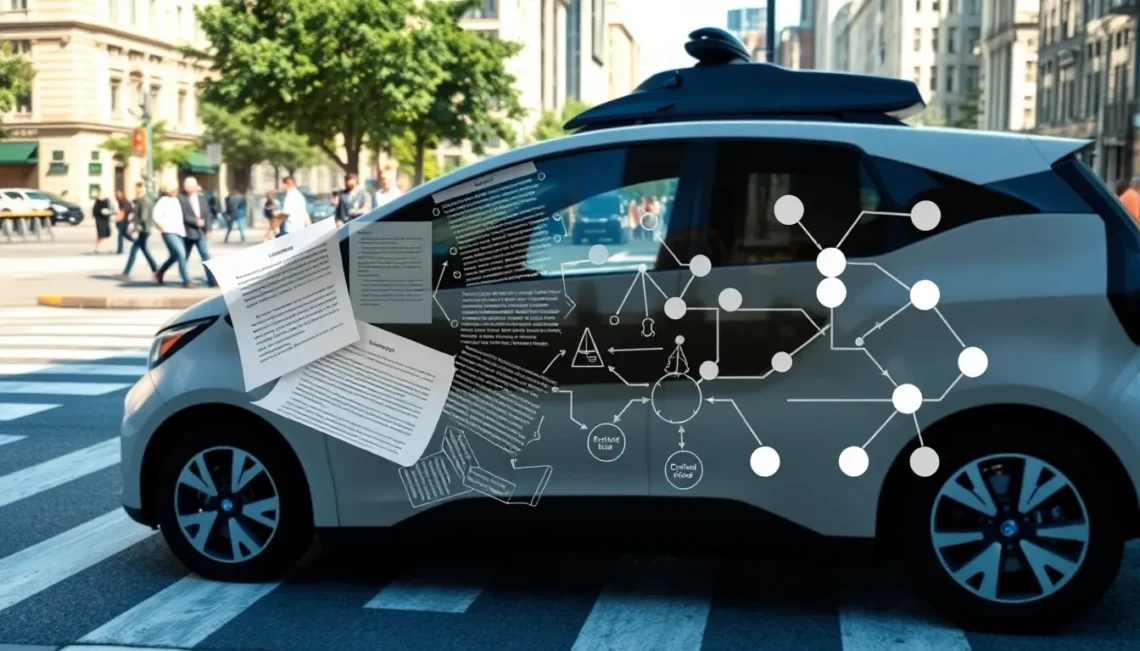
Self-driving cars promise a future where you can nap during your commute or catch up on work while your vehicle handles the highway. But when something goes wrong - when an autonomous vehicle crashes - who takes the blame? The driver who wasn't driving? The company that built the car? The programmers who wrote the code? As autonomous vehicles move from testing grounds to public roads, we're facing questions that blend technology, law, and philosophy in ways we've never had to consider before. The answers will shape not just how these vehicles operate, but who pays when they fail.
The Shifting Landscape of Driver Responsibility
Traditional car accidents have a straightforward blame structure. A human driver makes a mistake - runs a red light, texts while driving, misjudges a turn - and that driver bears responsibility. Insurance companies, courts, and police reports all point to the person behind the wheel. Autonomous vehicles shatter this simple model.
The Society of Automotive Engineers defines six levels of vehicle automation, from Level 0 (no automation) to Level 5 (full automation). Each level shifts responsibility in different ways. At Level 2, which includes many current "self-driving" features like Tesla's Autopilot, the human driver must remain engaged and ready to take control. When crashes happen at this level, courts have generally held the human driver responsible, even if they trusted the automation too much.
But what about Level 4 or Level 5 vehicles, where no human intervention is expected or even possible? If you're asleep in the back seat of a fully autonomous taxi and it crashes, you clearly weren't in control. The responsibility has to land somewhere else. Vehicle manufacturers argue they're building transportation tools, not assuming liability for every trip. Software developers point out they write code to specifications provided by others. Component suppliers say they just make the sensors and cameras. Everyone has a reason why the blame should fall on someone else.
This fragmented responsibility creates real problems for accident victims. In traditional crashes, you know who to sue. In autonomous vehicle crashes, you might need to pursue claims against multiple parties simultaneously, each with teams of lawyers ready to shift blame. Some legal experts suggest we need entirely new frameworks - perhaps treating autonomous vehicles more like elevators or trains, where the operating company assumes broad liability, or creating a no-fault insurance system specifically for self-driving cars.
The Trolley Problem Comes to Life
Philosophy classrooms have debated the Trolley Problem for decades: if a runaway trolley is about to kill five people, and you can divert it to a track where it will kill only one person, should you? It's a thought experiment. But autonomous vehicles turn it into engineering.
Self-driving cars need programmed responses for unavoidable accidents. If a child runs into the street and swerving would send the car into a group of pedestrians, what should the vehicle do? If braking won't prevent a collision, should the car prioritize its passengers or minimize total harm? These aren't hypothetical questions - they're lines of code that someone has to write.
Fun Facts & Trivia
- Germany established formal ethical guidelines for autonomous vehicles that explicitly prioritize protecting human life above all other considerations, including property damage or animal welfare.
- The Trolley Problem, originally formulated by philosopher Philippa Foot in the 1960s, has become central to autonomous vehicle ethics discussions, forcing engineers to program responses to scenarios philosophers only theorized about.
- Liability in autonomous vehicle accidents can potentially involve the human occupant, the vehicle manufacturer, software developers, component suppliers, and even third-party maintenance providers, creating complex legal webs.
- The SAE automation levels directly influence legal liability - a Level 2 system still requires human attention and typically leaves responsibility with the driver, while Level 4 and 5 systems shift responsibility toward manufacturers and operators.
Different cultures answer these questions differently. Surveys show that people in some countries prioritize minimizing total casualties, while others insist vehicles should always protect their passengers first. Some ethicists argue that autonomous vehicles should never make value judgments about human lives - that all lives are equal and the car should simply brake and let physics decide. Others say that's a cop-out, that we have an obligation to program the best possible outcome.
The uncomfortable truth is that whatever choice programmers make, they're making a moral decision on behalf of society. If your car is programmed to sacrifice you to save a larger number of pedestrians, would you buy it? Probably not. But if everyone's car prioritizes its own passengers, we've collectively decided that drivers matter more than people outside vehicles. There's no neutral choice here, and whoever writes the code becomes a de facto moral authority.
Who Pays When Things Go Wrong?
Legal liability is one thing. Financial responsibility is another. When an autonomous vehicle causes an accident, someone needs to compensate the victims. The current insurance system isn't built for this.
Traditional auto insurance assumes human drivers cause accidents through negligence or recklessness. You pay premiums based on your driving record, age, and other risk factors. But if the car drives itself, what are you insuring? Your risk of choosing a poorly programmed vehicle? The manufacturer's risk of shipping buggy software? Some hybrid where you're still responsible for maintaining the car and keeping its sensors clean?
Several models have emerged. Some manufacturers, like Volvo and Mercedes-Benz, have stated they'll accept liability when their vehicles are in fully autonomous mode. This sounds generous until you read the fine print - they're accepting liability for defects in their autonomous systems, not for all accidents. If another car hits your autonomous vehicle, or if road conditions cause a crash, traditional liability rules still apply.
Product liability law offers another avenue. If a self-driving car crashes due to a software bug or sensor failure, victims might sue under the same legal theories used when a defective toaster causes a fire. But proving a defect in complex AI systems is harder than proving a toaster was wired wrong. The software might have functioned exactly as designed - the design itself might be the problem. And if the AI learned its driving behavior through machine learning rather than explicit programming, pinpointing responsibility becomes even murkier.
Some jurisdictions are experimenting with no-fault systems where a central fund compensates accident victims regardless of who or what caused the crash. This speeds up compensation and removes the need to prove fault, but it also means someone - probably taxpayers or all vehicle owners collectively - subsidizes the technology's failures. That might be fair if autonomous vehicles eventually prove much safer than human drivers, reducing overall accident costs. But in the transition period, it's a tough sell.
The Data Privacy Dimension
Autonomous vehicles are rolling surveillance systems. They need cameras, radar, lidar, and GPS to navigate. They record everything around them, often including the interiors where passengers sit. This data is crucial for determining what happened in an accident - it's the black box that can prove whether the vehicle or some external factor caused the crash.
But who owns this data? Can police access it without a warrant? Can insurance companies demand it to deny claims? If your autonomous vehicle's cameras recorded you doing something embarrassing or illegal before a crash, does that become evidence? We're still working out these questions, and the answers vary by jurisdiction.
There's also the question of data retention. If manufacturers delete driving data after a certain period to protect privacy, crucial evidence might disappear before anyone knows they need it. If they keep everything forever, they're building massive databases of people's movements and behaviors. Both choices have serious implications for responsibility - you can't prove what happened if the evidence is gone, but permanent surveillance creates its own ethical problems.
Conclusion
The ethics of autonomous vehicles force us to confront questions we've avoided with human drivers. We've always accepted that driving involves risk and that accidents happen. But when we hand control to machines, we're making collective decisions about acceptable risk, about whose lives matter more in impossible situations, and about how to distribute the costs of technological progress. There's no perfect answer - every framework for assigning responsibility involves trade-offs between fairness, efficiency, and practicality. What's clear is that we can't simply apply old rules to new technology. As autonomous vehicles become more common, we need legal and ethical frameworks built specifically for them, frameworks that acknowledge the shared responsibility among manufacturers, programmers, regulators, and yes, even the humans who choose to use these vehicles. The technology is moving faster than our ability to answer these questions, which means we're already making choices by default rather than by design.
FAQs
Who is liable if a fully autonomous vehicle causes an accident?
Liability typically falls on the vehicle manufacturer or the company operating the autonomous system when the vehicle is in fully autonomous mode. However, this can vary based on the specific circumstances, the level of automation, and local laws. In some cases, responsibility might be shared among the manufacturer, software developer, component suppliers, and maintenance providers. If the human occupant disabled safety features or failed to maintain the vehicle properly, they might share liability even in autonomous mode.
How do autonomous vehicles decide what to do in unavoidable accident scenarios?
Autonomous vehicles are programmed with decision-making algorithms that prioritize certain outcomes based on ethical guidelines established by manufacturers and regulators. Many systems prioritize minimizing harm overall, while some jurisdictions like Germany require that human life be protected above all other considerations. The specific programming varies by manufacturer, but most systems focus on collision avoidance and braking rather than making complex ethical calculations in real-time. The Trolley Problem scenarios, while philosophically important, represent edge cases that programmers handle through general principles rather than specific rules for every possible situation.
Will I still need car insurance if I own an autonomous vehicle?
Yes, you'll still need insurance, though the type might change. Instead of insuring against your driving mistakes, you might be insuring against system failures, cyber attacks, or situations where you're still expected to intervene. Some manufacturers include liability coverage when their vehicles are in autonomous mode, but you'll likely still need coverage for non-autonomous operation, comprehensive coverage for theft and damage, and protection for scenarios not covered by the manufacturer's policy. The insurance industry is developing new products specifically for autonomous vehicles that reflect the shifted risk profile.