The sizzle of a hot griddle, the aroma of spices wafting through narrow alleyways, the satisfying crunch of a perfectly fried snack - street food captures the soul of a culture in a way few other culinary experiences can. But you don't need a plane ticket or a bustling night market to enjoy these flavors. Recreating street food classics at home brings the world to your kitchen, letting you explore authentic tastes while controlling ingredients, adapting recipes to your preferences, and sharing cultural stories with family and friends. Whether you're craving Mexican tacos al pastor, Vietnamese banh mi, or Indian samosas, your home kitchen has everything you need to start this delicious journey.
Why Street Food Translates Beautifully to Home Cooking
Street food wasn't designed for professional kitchens with specialized equipment. These dishes evolved from necessity, created by vendors who needed to prepare food quickly with portable setups and accessible ingredients. That same simplicity makes them perfect for home cooks. Most street food recipes rely on fundamental techniques - pan-frying, grilling, steaming, or quick assembly - rather than complex culinary procedures.
Take Thai pad thai, for example. While it tastes exotic, the technique is straightforward stir-frying. You need a hot pan, rice noodles, a few key ingredients like tamarind paste and fish sauce, and about ten minutes. The same goes for Mexican street tacos. The magic isn't in complicated cooking methods but in the quality of your tortillas, the right balance of lime and cilantro, and properly seasoned meat.
Making these dishes at home also gives you control over ingredients. Street vendors often deep-fry in oil that's been used repeatedly, or add excessive salt and sugar to boost flavor quickly. At home, you can bake instead of fry, adjust sodium levels, swap proteins, or accommodate dietary restrictions without sacrificing authenticity. You're not just copying a recipe - you're adapting a tradition to fit your life.
Essential Ingredients and Where to Find Them
The biggest hurdle most people face isn't technique but sourcing ingredients. Fortunately, the global food market has expanded dramatically. Asian supermarkets stock everything from rice paper wrappers to gochujang paste. Latin American grocers carry masa harina for fresh tortillas and dried chilies for authentic salsas. Even mainstream supermarkets now dedicate aisles to international ingredients.
Start by identifying the core flavors of your chosen cuisine. For Southeast Asian dishes, you'll want fish sauce, tamarind paste, lemongrass, and galangal. Middle Eastern street food calls for tahini, sumac, za'atar, and pomegranate molasses. Indian recipes need a spice collection including cumin, coriander, turmeric, and garam masala. Once you stock these basics, you can tackle dozens of recipes without hunting for specialty items each time.
Online retailers have made rare ingredients accessible too. If your local stores don't carry Japanese takoyaki pans or Mexican comal griddles, they're available with quick shipping. But honestly, you can improvise most equipment. A regular skillet works for most flatbreads, a muffin tin can substitute for takoyaki molds, and a simple steamer basket handles bao buns just fine. Many street food recipes adapt easily to standard kitchen tools without losing their essential character.
Fun Facts & Trivia
- Ancient civilizations were already enjoying street food - vendors in Egypt sold fried fish and bread as far back as 1500 BCE, making it one of humanity's oldest dining traditions.
- Greek and Roman citizens bought ready-to-eat meals from street vendors thousands of years ago, proving that grabbing food on the go isn't a modern convenience but a timeless practice.
- Each street food dish carries the story of its origin, reflecting local ingredients, regional cooking methods, and the eating customs of the community that created it.
- Home cooks can make healthier versions of traditionally deep-fried street foods by using air fryers or baking methods without sacrificing the essential flavors and textures.
Mastering Techniques That Make the Difference
The gap between good and great street food often comes down to technique, not ingredients. Street vendors perfect their craft through repetition, but you can learn the key moves that elevate your home versions. High heat matters for many dishes. That charred edge on Korean bulgogi or the crispy bottom of a Chinese scallion pancake comes from cooking at temperatures higher than most home cooks use. Don't be timid with your burner.
Timing is equally crucial. Vietnamese pho requires simmering broth for hours to develop depth, but the actual assembly - blanching noodles, slicing herbs, adding meat - happens in seconds. Japanese okonomiyaki needs a specific batter consistency and careful flipping technique. Turkish gözleme demands rolling dough thin enough to see through. These aren't difficult skills, but they require attention and practice.
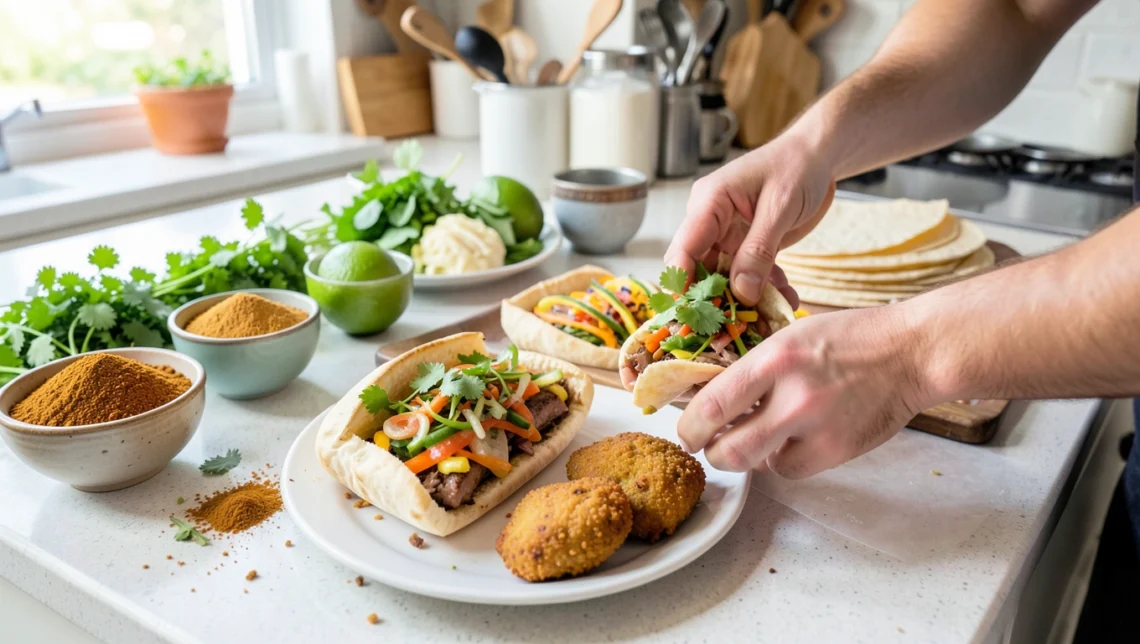
Layering flavors is another street food hallmark. A proper taco isn't just meat in a tortilla - it's the interplay of charred protein, fresh cilantro, sharp onion, acidic lime, and maybe a smoky salsa. Indian chaat combines crispy fried elements with cooling yogurt, tangy tamarind chutney, and fresh herbs. Each component serves a purpose. When recreating these dishes, resist the urge to simplify too much. Those seemingly small additions create the complexity that makes street food memorable.
Popular Street Foods Worth Trying First
If you're new to recreating street food, start with forgiving recipes that deliver big flavor without demanding perfection. Mexican street corn (elote) is nearly foolproof - grill corn, slather it with mayo and crema, sprinkle with cotija cheese and chili powder, squeeze lime over it. Done. It tastes incredible and builds your confidence.
Middle Eastern falafel is another excellent starting point. Blend chickpeas with herbs and spices, form into balls, and fry until golden. Serve in pita with tahini sauce, pickles, and fresh vegetables. The recipe is straightforward, and even slightly imperfect falafel still tastes delicious. Similarly, Japanese gyoza dumplings are forgiving. The filling is flexible, and while pleating the wrappers takes practice, even ugly dumplings taste great when pan-fried to crispy perfection.
For something more ambitious, try Vietnamese banh mi. It requires several components - pickled vegetables, pâté or mayo, cilantro, jalapeños, and your choice of protein - but each element is simple on its own. The assembly teaches you about balancing textures and flavors, a skill that transfers to countless other dishes. Iconic street food recipes from various cultures share this quality of being greater than the sum of their parts.
Conclusion
Bringing global street food into your home kitchen does more than expand your recipe collection. It connects you to culinary traditions that have fed communities for generations, sometimes centuries. You're not just following instructions - you're participating in food culture, adapting techniques that vendors perfected on street corners from Bangkok to Mexico City to Mumbai. The beauty of street food is its accessibility. These dishes were never meant to be exclusive or complicated. They're the people's food, designed to be delicious, affordable, and made with whatever's available.
Start with one dish that excites you. Don't worry about perfection on your first attempt. Street food vendors didn't master their craft overnight, and neither will you. But with each batch of dumplings, each pan of pad thai, each taco you assemble, you'll get closer to those authentic flavors you're chasing. Your kitchen might not have the atmosphere of a night market, but it has something better - the freedom to experiment, adjust, and make these global classics truly your own.
FAQs
Do I need special equipment to make street food at home?
Most street food recipes work with standard kitchen equipment. A good skillet, a steamer basket, and basic utensils handle the majority of dishes. While specialized tools like a tortilla press, wok, or takoyaki pan can improve results, they're not essential when you're starting out. Many cooks successfully improvise with what they already own - a heavy pan instead of a griddle, a rolling pin instead of a press, or a regular pot instead of a wok.
How can I make street food healthier without losing flavor?
Focus on cooking methods rather than eliminating ingredients entirely. Air frying or baking instead of deep frying reduces oil while maintaining crispiness. Use Greek yogurt in place of heavy cream or mayo in sauces. Load up on fresh herbs and vegetables, which add flavor and nutrition. You can also control sodium by making your own sauces rather than relying on store-bought versions, and choose lean proteins while keeping the spice blends and marinades that deliver authentic taste.
Where should I start if I've never made international street food before?
Choose dishes with short ingredient lists and simple techniques. Mexican street tacos, Middle Eastern falafel wraps, or Thai spring rolls are excellent entry points. These recipes are forgiving, use accessible ingredients, and deliver satisfying results even if your technique isn't perfect. Once you've built confidence with a few basic dishes, you can tackle more complex recipes that require multiple components or specialized techniques. The key is starting with something that excites your taste buds enough to keep you motivated through the learning process.