The school bell rings, backpacks hit the floor, and suddenly your once-quiet home transforms into a whirlwind of noise and energy. But here's what many parents miss: that burst of after-school chaos often masks something deeper. Kids aren't just being loud or difficult - they're genuinely depleted. Six or seven hours of focus, social navigation, and self-regulation takes a real toll. What they need most isn't another activity or screen time, but genuine quiet time to reset. The right calm activities don't just keep kids occupied; they help restore the emotional and mental reserves burned through during a full school day.
Why Quiet Time Matters More Than You Think
Think about your own workday. After hours of meetings, decisions, and constant interaction, you probably crave a moment of peace. Kids experience the same drain, often more intensely. Their brains are still developing the executive function skills that help adults manage stress and transitions. When children walk through the door after school, they've spent the day following rules, sitting still, managing peer relationships, and processing new information. That's exhausting work.
Quiet time gives children space to emotionally reset and recharge. Without it, you'll often see the aftermath: meltdowns over homework, sibling conflicts that escalate quickly, or that glazed-over look that comes from complete mental fatigue. These aren't behavior problems - they're signs of a depleted child who hasn't had a chance to decompress.
The benefits go beyond just avoiding tantrums. When kids engage in calm, self-directed activities, their minds get the chance to process everything they learned that day. Information settles, connections form, and focus improves. You're essentially giving their brain the downtime it needs to consolidate learning. Plus, quiet moments naturally foster independence. When children choose their own activities and direct their own play without constant input, they build decision-making skills and self-reliance.
Reading and Story Time
Books offer one of the most accessible quiet time activities, and the beauty is that kids can engage at their own level. A beginning reader might sound out simple sentences while an older child gets lost in a chapter book. Either way, they're in control of the pace and the experience.
Create a cozy reading nook - it doesn't need to be elaborate. A corner with cushions, a blanket, and good lighting works perfectly. Let your child choose what they read. Yes, even if it's the same picture book for the fifteenth time or a graphic novel you don't find particularly enriching. The goal isn't literary excellence; it's giving them agency and a calm activity they enjoy.
For younger children who can't read independently yet, audiobooks bridge the gap beautifully. They can look at picture books while listening, or simply close their eyes and let the story wash over them. Some families find that calming activities like listening to stories help children transition from the structured school environment to home more smoothly.
The key is making reading feel like a treat, not another task. No comprehension questions, no required reports. Just the simple pleasure of getting lost in a story.
Hands-On Creative Activities
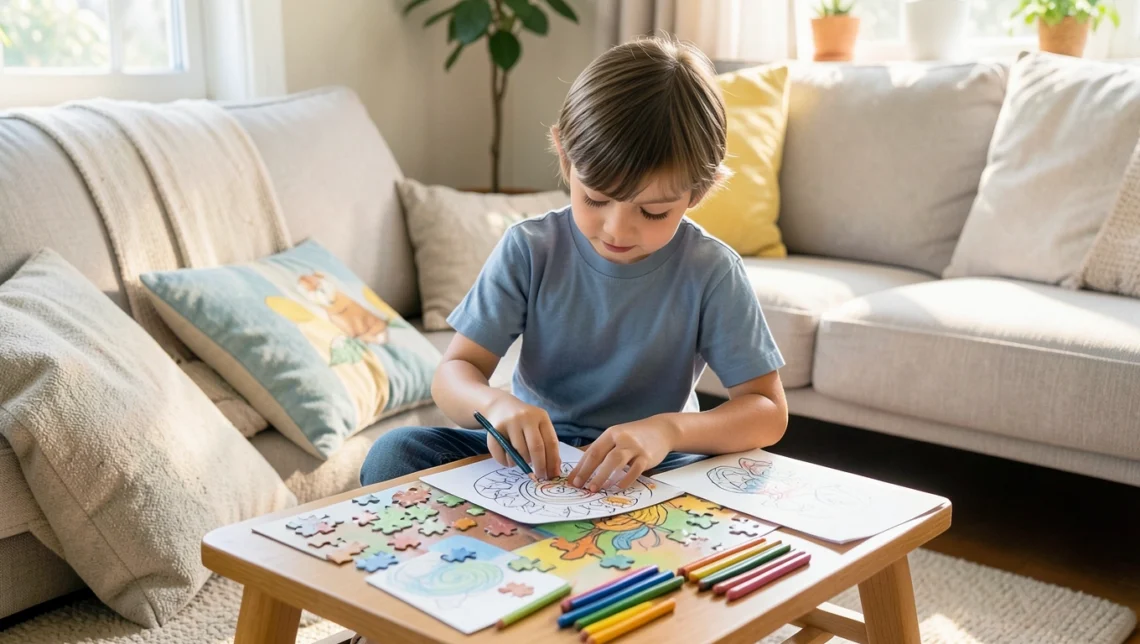
Drawing, coloring, and crafting engage kids in a completely different way than academic work. There's no right answer, no grade, no performance pressure. A child can spend twenty minutes coloring the same mandala or sketching their favorite animal, and that repetitive, focused activity becomes almost meditative.
Keep supplies accessible but organized. A bin with crayons, markers, colored pencils, and plain paper gives kids everything they need without requiring your help to set up. Some children love coloring books with intricate designs, while others prefer blank paper where they can create freely. Both work equally well for quiet time.
Puzzles deserve special mention here. Working on a jigsaw puzzle requires focus but not the same kind of mental strain as homework. Kids can work at their own pace, step away and come back, and experience the satisfaction of seeing pieces come together. Keep a puzzle in progress on a table or tray where it can stay set up for several days.
Clay, playdough, or kinetic sand add a sensory element that many kids find particularly soothing. The tactile experience of molding and shaping engages their hands while their minds wander and process. You'll often find that children work through emotions or replay their day through this kind of quiet, creative play.
Fun Facts & Trivia
- Unstructured quiet time allows children to explore new ideas and think more creatively, as their minds aren't being directed toward specific outcomes.
- Sensory play activities like working with sand or water can help regulate a child's nervous system after a stimulating school day.
- Children who engage in self-directed quiet activities develop stronger problem-solving skills because they learn to entertain themselves without constant adult guidance.
- The simple act of coloring activates different areas of the brain than academic work, giving overused neural pathways a chance to rest.
Building Quiet Routines and Spaces
The most effective quiet time happens when it becomes a predictable part of your after-school routine. Kids thrive on knowing what comes next. When they understand that the first thirty minutes after school are for calm activities, they stop fighting it and start looking forward to that decompression time.
Start by designating a specific quiet time window. Right after a snack often works well - you've addressed the immediate hunger, and now they can settle into a calm activity before homework or other responsibilities. Some families find that physical outlets help kids wind down first, followed by quieter activities, while others go straight to calm time.
The physical space matters too. You don't need a dedicated room, but having a defined area signals that it's time to shift gears. This might be a reading corner, a spot at the kitchen table with art supplies, or even a blanket fort that becomes their quiet zone. The key is consistency - using the same space helps trigger the mental shift to calm mode.
Respect the quiet. This isn't the time to ask about their day, discuss upcoming schedules, or solve problems. Save conversations for later. Your job during quiet time is to be present but not intrusive. Sit nearby with your own book or quiet task. Your calm presence reinforces that this time is protected and valued.
Some children resist quiet time initially, especially if they're used to jumping straight into screens or high-energy play. Hold firm but gentle. Offer choices within the quiet time framework: "Would you like to read or work on your puzzle?" This gives them control while maintaining the boundary that this time is for calm activities.
Conclusion
Quiet time after school isn't about keeping kids occupied or out of your way. It's about recognizing that children need genuine downtime to process their day, regulate their emotions, and recharge for what comes next. When we rush them from school to activities to homework without that buffer, we're asking them to run on empty. The meltdowns, the resistance, the glazed expressions - these are often just signs of a child who hasn't had space to reset.
The activities themselves are simple: books, art supplies, puzzles, sensory play. What makes them powerful isn't complexity but consistency and respect for the child's need to direct their own recovery time. Start small if you need to. Even fifteen minutes of protected quiet time makes a difference. Watch what happens when your child knows they have that space waiting for them each day. You'll likely see calmer evenings, better focus during homework, and a child who's learning to recognize and meet their own needs for rest and restoration.
FAQs
How long should quiet time last after school?
Most children benefit from twenty to forty minutes of quiet time, though this varies by age and temperament. Younger children might need shorter periods of fifteen to twenty minutes, while older elementary students can often sustain calm activities for up to an hour. Pay attention to your child's cues. If they're genuinely refreshed and ready to move on, that's your signal. The goal is restoration, not forcing them to sit still beyond what's helpful.
What if my child refuses to do quiet activities?
Resistance often comes from unclear expectations or feeling controlled. Start by explaining why quiet time matters, using language they understand: "Your brain worked really hard today and needs a rest, just like your body needs rest after running." Offer real choices within the quiet framework rather than dictating one activity. If they still resist, look at timing - some kids need to move their bodies first before they can settle. A quick outdoor play session or even jumping jacks might be the bridge they need before transitioning to calm activities.
Can quiet time include screens or should it be completely screen-free?
True quiet time works best when it's screen-free. Screens engage the brain in a fundamentally different way than reading, drawing, or hands-on play. They're stimulating rather than restorative, and they don't provide the same processing space that children need after school. If your child is accustomed to immediate screen time, transition gradually. Start with ten minutes of screen-free quiet time and build from there. Save screens for later in the evening when they've had a chance to genuinely decompress through calmer activities.
