Free returns have become the golden standard of online shopping. Customers expect them, retailers advertise them, and the entire e-commerce ecosystem has been built around the promise that you can send anything back without paying a dime. But behind this customer-friendly policy lies a complex web of costs that most shoppers never see. The reality is that free returns aren't actually free at all. Someone pays, and that someone is usually the retailer, who then passes those costs along in ways that affect pricing, sustainability, and even the viability of smaller businesses. Understanding the true financial and environmental toll of returns helps explain why some retailers are starting to rethink their policies.
The Direct Financial Hit to Retailers
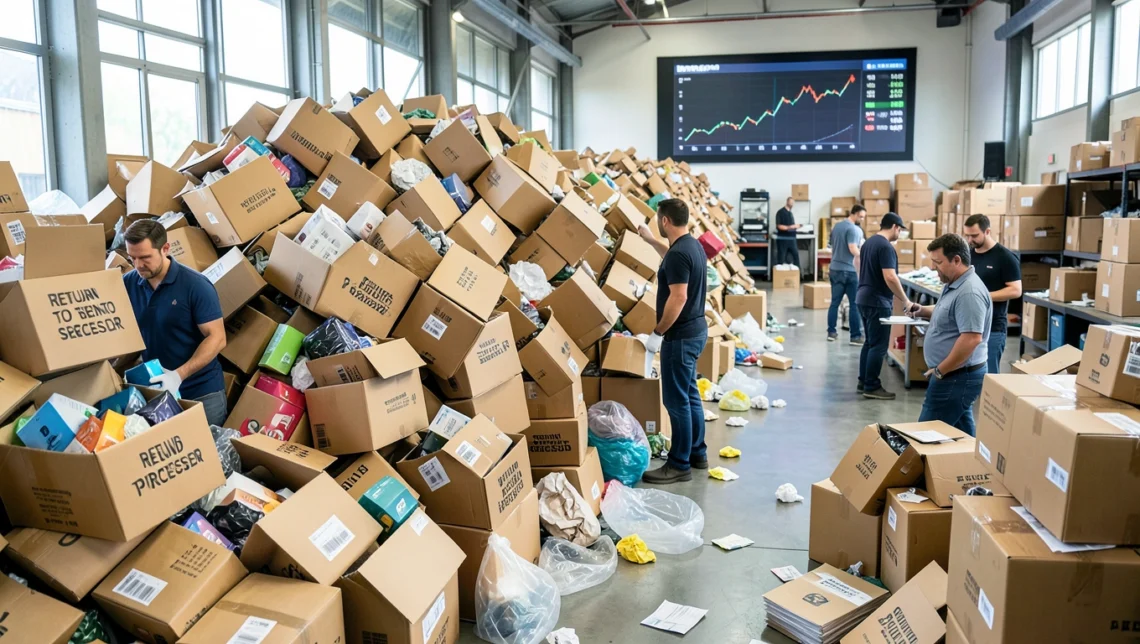
Processing a return isn't just about accepting a package and issuing a refund. Each return triggers a cascade of costs that quickly add up. The logistics alone can cost retailers between $10 and $65 per return, depending on the product category and what happens to the item afterward. That includes shipping, inspection, restocking, and often repackaging. For items that can't be resold at full price, the losses multiply.
The numbers get even more sobering when you zoom out. Globally, e-commerce returns exceeded $640 billion annually, with U.S. retail returns alone reaching $849.9 billion in 2025. To put that in perspective, the cost of managing the returns process can reach up to 66% of the original item's purchase price, especially when the product can't be resold as new. Approximately 21% of an order's value can be attributed to return processing costs, which means that for every $100 sale, retailers might spend $21 just handling the possibility of a return.
These aren't abstract numbers. They represent real money that comes directly out of profit margins, forcing retailers to make difficult decisions about pricing, inventory, and which products to carry. Smaller retailers feel the squeeze most acutely, as they lack the economies of scale that allow giants to absorb these costs more easily.
Return Fraud and Abuse Drain Billions
Not all returns are legitimate. Return fraud and abuse have become a massive problem, costing retailers over $100 billion annually. For every $100 in returned merchandise, retailers lose about $13.70 to fraud. The tactics vary, but they're surprisingly common. Overstating return quantities accounts for 71% of fraud attempts, while returning empty boxes makes up 65%, and swapping items for counterfeits represents 64% of cases.
This isn't just organized crime. Everyday consumers engage in what's sometimes called "wardrobing," buying clothes for a special event, wearing them once, and then returning them. Others practice "bracketing," ordering multiple sizes or colors with the intention of keeping one and returning the rest. While bracketing isn't technically fraud, it strains the system and drives up costs for everyone. Gen Z consumers average 7.7 online returns in the past 12 months, more than any other generation, reflecting changing shopping habits that treat returns as a normal part of the purchase process rather than an exception.
Retailers have tried various countermeasures, from tracking serial returners to charging restocking fees, but the cat-and-mouse game continues. The fundamental tension is that the policies designed to build customer trust also create opportunities for abuse.
Fun Facts & Trivia
- Approximately 9.5 billion pounds of returned goods end up in U.S. landfills annually, creating a massive waste problem beyond the financial costs.
- Consumer behavior is heavily influenced by return policies, with 82% of shoppers considering free returns essential when choosing where to shop.
- A positive return experience makes 97% of shoppers more likely to make a repeat purchase, showing that returns can build loyalty despite their costs.
- While 62% of shoppers state they will not buy from a retailer without free returns, many adapt to return fees if communicated clearly upfront.
The Environmental Cost Nobody Talks About
The financial toll is only part of the story. Returns carry a significant environmental burden that's often invisible to consumers clicking the "return" button. Returns increase a purchase's carbon footprint by an average of 30%, with clothing returns alone generating emissions equivalent to 3 million cars on the road.
Think about the journey of a returned item. It travels from the customer back to a warehouse, gets inspected and processed, and then either goes back into inventory, gets shipped to a liquidator, or ends up in a landfill. Each leg of that journey burns fuel and generates emissions. The packaging materials multiply, too. Many returned items can't be resold in their original packaging, requiring new boxes, plastic, and filler materials.
The waste problem extends beyond carbon emissions. Perfectly good products often can't be economically restocked, especially for low-margin items. It's sometimes cheaper for a retailer to tell a customer to keep an unwanted item and issue a refund anyway than to pay for return shipping and processing. Those items that do come back frequently end up in liquidation channels or, worse, landfills. The scale of this waste challenges the notion that online shopping is inherently more sustainable than traditional retail.
How Retailers Are Adapting
Faced with mounting costs, some retailers are rethinking the free-returns model. The changes vary. Some charge return shipping fees, others impose restocking fees on certain categories, and a few have started tracking return rates and restricting accounts that return excessively. These moves aren't popular with customers, but they reflect economic reality.
The shift requires careful communication. Retailers who implement return fees without warning face backlash and lost sales. Those who explain the reasoning and set clear expectations upfront find that customers often understand. Transparency matters. When shoppers know that a return fee helps keep prices lower overall or supports sustainability efforts, many accept the trade-off.
Some companies are getting creative with alternatives. Offering store credit instead of refunds reduces processing costs. Encouraging exchanges rather than returns keeps the sale alive. Improving product descriptions, sizing guides, and customer reviews helps reduce returns at the source by ensuring customers get what they expect the first time. Virtual try-on tools and AI-powered fit recommendations are emerging as ways to cut return rates before they happen.
The retailers finding success aren't eliminating returns, they're making them more intentional. They're asking customers to think twice before ordering five sizes of the same jeans, and they're building systems that make the first purchase more likely to be the right one.
Conclusion
Free returns have shaped online shopping into what it is today, removing risk and building trust between retailers and customers. But the costs behind that convenience are real and substantial, affecting everything from retail profitability to environmental sustainability. The $100 billion lost to fraud, the billions of pounds in landfills, and the carbon emissions from reverse logistics all point to a system that needs recalibration. As more retailers adjust their policies, the era of truly free returns may be ending, replaced by models that balance customer convenience with economic and environmental responsibility. The question isn't whether returns will continue, they will, but how the costs get distributed and managed in ways that make sense for businesses, customers, and the planet.
FAQs
Why are some retailers starting to charge for returns?
Retailers are introducing return fees because the costs of processing returns have become unsustainable. With return processing eating up to 21% of an order's value and fraud adding billions in losses, many businesses can't absorb these expenses while keeping prices competitive. Return fees help offset logistics costs, reduce frivolous returns, and discourage fraud. Some retailers use the fees to fund sustainability initiatives or keep base prices lower for all customers.
What happens to items after they're returned?
Returned items follow different paths depending on their condition and value. Items in perfect condition may be restocked and resold at full price. Slightly damaged or opened items often go to liquidation channels or discount sellers. Some products, especially low-value items, are destroyed or sent to landfills because the cost of processing them exceeds their resale value. In some cases, retailers tell customers to keep the item and still issue a refund because return shipping and handling cost more than the product is worth.
How can I reduce my own return rate when shopping online?
Start by reading product reviews carefully, paying special attention to comments about sizing, quality, and accuracy of descriptions. Use sizing charts and measurement guides rather than guessing. Check return policies before buying so you understand any fees or restrictions. Take advantage of virtual try-on tools or AR features when available. Ask questions through customer service before ordering if you're uncertain about a product. When possible, order one item at a time rather than bracketing multiple sizes, and give yourself time to make thoughtful decisions rather than impulse purchases you'll likely return.